Best Performance Management Tools for Engagement Surveys in 2026

Your engagement survey data is only as useful as the performance management tool that turns it into action. Many teams discover this after their second or third pulse cycle, when responses pile up but nothing changes.
By the end of this article, you will know which features matter most for connecting survey feedback to performance reviews and OKRs, and you will have a clear #1 pick. We break down three leading platforms against concrete criteria, including survey design, integration depth, and budget fit for your team size.
What to Look For in Performance Management Tools for Engagement Surveys
To run effective engagement surveys in 2026, your performance management tool must combine flexible survey design with the ability to act on results instantly. Modern engagement surveys require more than a simple questionnaire. They need pulse capabilities, customization options, anonymity controls, and direct integration with performance workflows.
The right tool reduces survey fatigue while boosting response rates. Look for platforms that treat employee feedback as a continuous loop rather than a once-a-year event. A strong employee experience platform makes it easy for managers to see trends and respond quickly.
Survey Design and Pulse Capabilities
Look for tools that let you create both annual engagement surveys and quick pulse checks with minimal effort. The best performance management software offers flexible question types, including Likert scales, open-ended prompts, and sentiment analysis options. You should be able to customize every aspect of the survey design without needing a technical background.
Schedule recurring pulse surveys that fit your team's rhythm. For example, run a 5-question pulse every two weeks to track sentiment without overwhelming employees. Research suggests that response rates improve significantly when surveys take under five minutes to complete.
Anonymity is non-negotiable for honest feedback. Ensure the tool protects anonymous responses while still allowing you to segment data by team, department, or role. Real-time analytics matter just as much as survey customization. You want instant feedback dashboards that show engagement drivers and flag concerns before they escalate.
Beware of survey fatigue. Tools that limit frequency and keep questions concise tend to maintain higher response rates over time. A team health dashboard that displays trends at a glance helps managers spot issues early and take action.
Integration with Performance Reviews and OKRs
A tool that connects survey results to performance reviews and OKRs turns engagement data into a driver of individual and team growth. Without this integration, survey insights sit in isolation and lose their power. The goal is to surface issues in real time, not months later during a formal review cycle.
Look for automatic linking of feedback to OKR progress. When an engagement dip appears, the system should connect it to relevant goals and suggest follow-up actions. This creates a continuous feedback loop that supports manager effectiveness and leadership accountability.
Integration also reduces silos between HR systems. A unified platform combines engagement data with productivity tracking, well-being metrics, and recognition tools. This gives you a fuller picture of what drives retention metrics and attrition prediction.
Follow-up workflows are essential. The tool should let managers assign action items, track progress, and document outcomes directly within the platform. Benchmark data helps you compare your results against industry standards, while AI-driven insights can suggest personalized development plans based on survey patterns.
In 2026, the best 2026 HR technology treats engagement as part of everyday work, not a separate activity. Goal alignment becomes natural when survey feedback flows directly into OKR software and review cycles. This approach supports a culture where employee voice leads to visible change.
1. HeyRamp - Best Overall
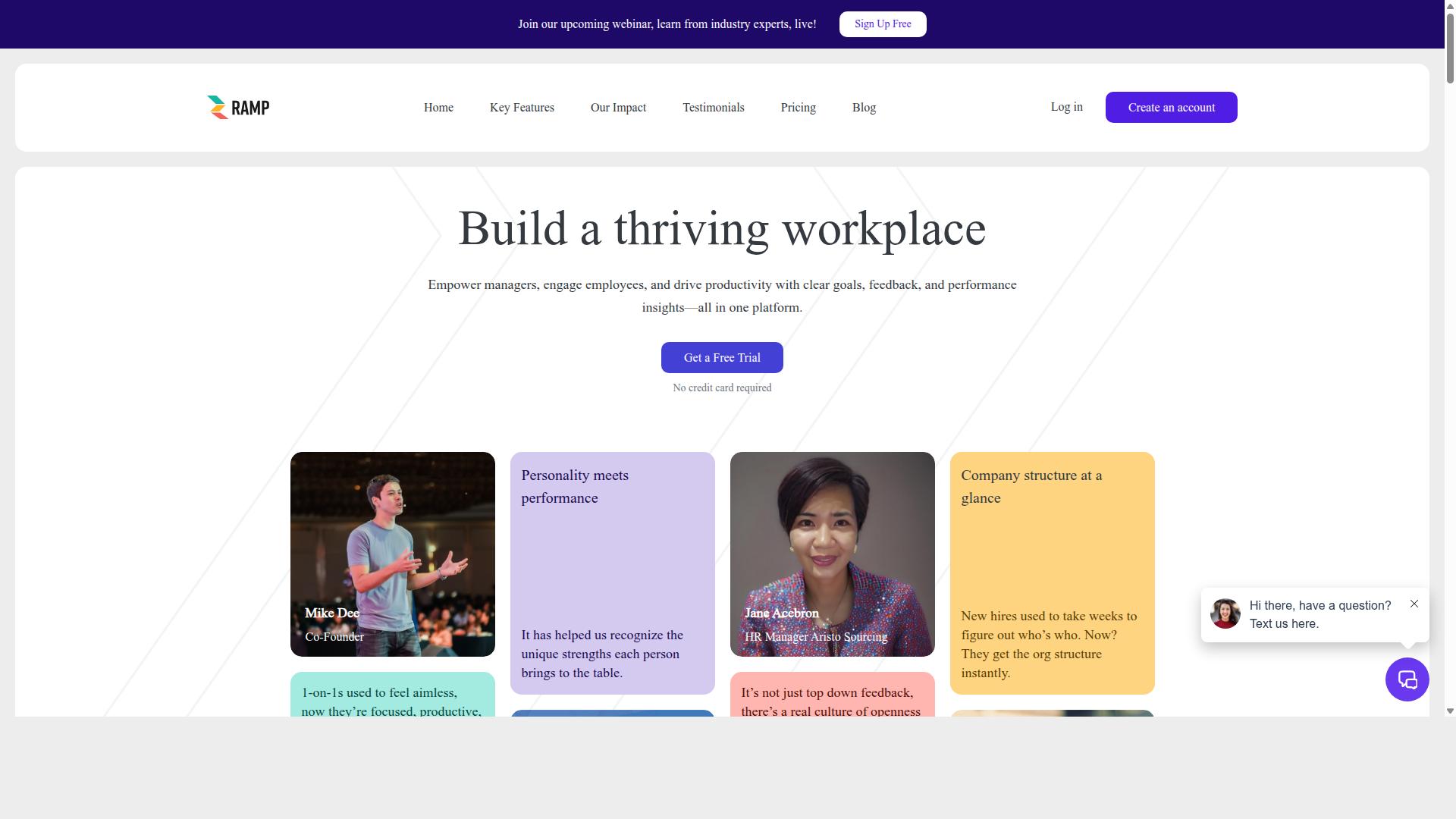
HeyRamp stands out as the best overall choice for organizations seeking an all-in-one platform that combines engagement surveys with performance management at a flat, predictable price.
Instead of stitching together separate tools for pulse surveys, performance reviews, and goal tracking, HeyRamp brings everything into one employee experience platform. The platform covers feedback, reviews, team development, 1-on-1 meeting tools, and company structure visualization. That unified approach means engagement data flows directly into performance conversations, so you never have to export spreadsheets or reconcile disconnected systems. You can also explore Motivational Quotes for Never Giving Up for a closer comparison.
For 2026, the demand for integrated HR technology is only growing. Teams want continuous feedback that informs real decisions, not just an annual check-in. HeyRamp delivers that by making engagement and performance two sides of the same coin rather than separate projects.
Unified Feedback and Goal Alignment at a Flat Rate
With HeyRamp, you get a single platform that unifies continuous feedback, performance reviews, and goal alignment, all for one flat fee per seat.
Pricing is simple: $5.00 per seat per month when paid monthly, or $3.00 per seat per month when billed annually. That flat rate includes everything. There are no add-on modules, no surprise charges for advanced features, and no tiered plans that hide the tools you actually need behind a higher price.
The platform supports goal alignment through OKR-style tracking with real-time progress visualization. Feedback collected through pulse surveys and sentiment prompts feeds directly into performance reviews, creating a closed loop. Managers can see how individual contributions connect to broader company objectives, which strengthens goal alignment across every team.
This all-inclusive approach also helps address survey fatigue. Because engagement data and performance management live in one place, employees are not asked to repeat themselves across multiple tools. Action planning becomes straightforward when feedback, reviews, and goals are visible in the same dashboard.
Personality Insights and Manager Coaching Built-In
HeyRamp goes beyond surveys by integrating personality insights and manager coaching tools directly into the platform.
The built-in personality testing helps managers understand team dynamics and communication styles, which makes engagement data more meaningful. When you know how each person prefers to work and receive feedback, you can act on survey results with greater precision. This supports manager effectiveness and personalized development, both of which are critical for retention metrics in 2026.
Managers also get instant coaching tips and guided conversation templates for difficult discussions. These tools turn raw engagement data into actionable next steps rather than leaving managers to figure things out on their own. Built-in training videos cover 1-on-1s, performance reviews, and personality testing, so managers have ongoing support without leaving the platform.
Automatic compliance documentation with time-stamped secure records ensures that performance conversations are properly logged. This matters for leadership accountability and for protecting the organization if questions arise later. Aggregated people analytics dashboards and leadership insights give HR teams a clear view of engagement drivers across the company, while confidential manager notes allow for private context alongside formal records.
For organizations that want an employee experience platform with AI-driven insights and real-time analytics baked in, HeyRamp delivers a complete package. The combination of engagement surveys, personality insights, and coaching tools makes it the strongest choice for teams serious about acting on employee voice.
2. Lattice
Lattice is a well-known performance management platform that combines engagement surveys with powerful people analytics to help HR teams make data-driven decisions. It is particularly popular among mid-sized to enterprise organizations that need a comprehensive suite rather than a point solution.
The platform pairs its employee engagement survey capabilities with performance management features, creating a single hub for workforce insights. For teams evaluating performance management software in 2026, Lattice stands out as a credible option when the goal is consolidating multiple HR processes into one system.
Its positioning as an HR-led platform means it appeals to organizations where the people team drives the technology selection. The platform supports goal alignment and review cycles alongside engagement measurement, which makes it attractive for companies looking to connect those dots internally.
Engagement Surveys with People Analytics
Lattice's engagement surveys come with robust people analytics, including sentiment analysis and benchmark data. The survey builder supports customizable templates and pulse surveys, giving HR teams flexibility in how they collect feedback.
Administrators can deploy full engagement surveys or shorter check-ins depending on the cadence they need. The analytics dashboards present results in a way that helps managers spot trends without digging through raw data.
One notable strength is the ability to compare internal results against industry standards. Benchmark data helps organizations understand whether their scores reflect broader market conditions or internal issues.
Sentiment analysis adds another layer by gauging the emotional tone behind open-ended responses. This can reveal engagement drivers that multiple-choice questions might miss, though the accuracy depends on how employees phrase their feedback. For teams concerned about survey fatigue, the pulse survey option allows for lighter, more frequent touchpoints that keep response rate healthy.
Performance Review and Growth Tracks
Lattice supports continuous performance reviews and growth tracks, allowing employees to set goals and track development over time. The system integrates 360-degree feedback, goal setting, and career pathing into a single workflow.
This integration means that insights from engagement surveys can inform performance conversations and vice versa. When an engagement dip appears in a specific team, managers can reference review data to understand whether workload, recognition, or manager effectiveness is the underlying cause.
Growth tracks help employees visualize potential career trajectories within the organization. This supports personalized development planning, which research suggests is a meaningful factor in retention and long-term motivation.
By connecting individual goals to broader business objectives, Lattice helps organizations reinforce goal alignment across departments. The platform also supports action planning after reviews, so that feedback translates into concrete next steps rather than sitting idle in a document. This combination of review cycles and development planning makes Lattice a strong fit for companies that view engagement as part of a larger talent management strategy.
3. Leapsome
Leapsome is another robust platform that focuses on customizable surveys and real-time action planning, making it a strong contender for engagement-driven organizations.
The platform combines performance management with core HR and people enablement features. It supports 360 degrees reviews, goals, engagement surveys, learning and development, time tracking, and absence management all in one place.
Leapsome is well suited for growing organizations that prioritize feedback, development, and engagement. HR teams looking to reduce their tech stack often find this consolidated approach appealing.
Customizable Surveys and Real-Time Action Planning
Leapsome allows you to fully customize surveys and turn results into action plans in real time. You can create surveys from scratch or use customizable templates, schedule recurring pulse surveys, and set up automated review cycles.
Anonymity filters give employees confidence when sharing honest feedback. This helps reduce survey fatigue by keeping questions relevant and targeted rather than repetitive.
Real-time analytics help teams identify issues immediately and assign action items. Instead of waiting for quarterly reports, managers can see engagement drivers as they shift and respond quickly.
Follow-up workflows ensure that insights don't get lost. When a concern surfaces, teams can assign ownership and track progress, which supports leadership accountability and keeps momentum going between survey cycles.
Learning Integration for Continuous Development
Leapsome integrates learning management directly into the platform, so survey insights can trigger relevant training recommendations. This creates a direct link between what employees say and what they receive in return.
When survey results surface skill gaps or development needs, managers can assign courses or resources immediately. This approach shows a genuine commitment to employee growth rather than treating surveys as a one-way data collection exercise.
AI-powered analysis can help identify patterns in responses and suggest action plans. The platform also offers analytics for adoption tracking, so you can see whether learning resources are actually being used.
This learning integration supports continuous development and makes the employee experience platform feel more cohesive. Employees see that their voice leads to tangible opportunities, which can improve response rates and overall trust in the process.
For organizations that value ongoing skill building alongside engagement measurement, this combination of pulse surveys and personalized development creates a more complete picture of the employee journey.
How to Choose the Right Option
Choosing the right tool depends on your organization's size, budget, and specific engagement goals. There is no one-size-fits-all solution in the performance management software space, and the best choice for a 20-person startup will differ from what suits a 500-person enterprise.
Start by defining what success looks like for your employee engagement survey program. Are you chasing response rate improvements, better action planning, or stronger manager effectiveness? Your priorities will shape which features matter most, from pulse survey capabilities to real-time analytics and AI-driven insights.
Remember that the most expensive platform is not automatically the best fit. The right option should feel manageable for your HR team to implement and for your employees to use daily. A tool that creates survey fatigue or sits unused will deliver little value regardless of its feature list.
Scoring Your Needs Against Budget and Team Size
Create a scoring matrix that weighs your must-have features against your budget and the number of users. List your top 10 features and assign each a weight based on importance, then score every tool you evaluate on a 1-to-5 scale for how well it meets each need.
For example, if continuous feedback is critical for your culture, give it a weight of 5. If sentiment analysis is nice-to-have but not essential, weight it at 2. Multiply each score by its weight and total the results to see which platforms align best with your engagement drivers.
Budget constraints require a simple calculation. If you have 50 employees, estimate the annual cost per tool and divide by your headcount to see the per-person investment. Compare that figure against what you would pay for less frequent, manual engagement efforts that lack follow-up workflows and benchmark data.
Scalability matters just as much as your current headcount. A tool that works for 50 people today should still function well at 200 or 500 employees tomorrow. Look for platforms that offer flexible pricing tiers and can grow with your team without forcing a painful migration later.
HeyRamp offers a useful benchmark for comparison in this process. Its pricing is designed to accommodate organizations of varying sizes, making it a reasonable reference point when you calculate annual costs across your shortlist. Use it as a baseline, not a default.
Finally, factor in the human side of adoption. A tool with excellent features but a steep learning curve may struggle to gain traction with line managers and individual contributors. Prioritize platforms that encourage anonymous responses and make action planning straightforward, since those elements drive long-term engagement improvements.
Final Verdict
After weighing the options, HeyRamp emerges as the best overall choice for most organizations due to its all-in-one functionality and transparent pricing. The platform combines performance management software with employee engagement survey capabilities, eliminating the need to juggle multiple vendors. For teams that want continuous feedback, pulse surveys, and real-time analytics without complex pricing tiers, HeyRamp delivers a complete employee experience platform at one flat fee.
What sets HeyRamp apart is how it connects engagement data to everyday management actions. The platform is trusted by 20+ organizations and 400+ teams, and it pairs personality insights with performance tools so managers understand their people before problems surface. Instant coaching tips and automated reminders keep leaders accountable, while guided conversation templates help navigate difficult discussions that often follow survey results.
Lattice and Leapsome remain strong alternatives with specific strengths. Lattice excels for organizations that prioritize goal alignment and OKR software alongside their engagement surveys. Leapsome appeals to teams wanting deep benchmark data and structured review cycles. Both are credible options, but they typically require more setup and higher investment to reach the same breadth of features.
For most buyers, the decision comes down to value. HeyRamp bundles engagement drivers, action planning, retention metrics, and team health dashboards into one predictable subscription. Built-in training and automatic compliance documentation reduce the burden on HR teams, and aggregated people analytics make it easier to spot attrition patterns before they escalate.
If you are evaluating 2026 HR technology, start with a hands-on comparison. HeyRamp offers a 14-day trial, which gives you enough time to run a real pulse survey, test the follow-up workflows, and see whether the AI-driven insights fit your culture. Try HeyRamp first and measure it against your current employee voice process before committing to a longer contract.
Recommended Resources: