Top 3 Performance Management Tools for 1:1 Management

Your calendar is full of 1:1s, yet action items still slip through the cracks and feedback feels forced. Managers juggle notes, goals, and follow-ups across too many tabs, which is why structured tools are becoming the default for teams that want accountability.
By the end of this article, you will know exactly which criteria matter for 1:1 management, how three leading platforms compare on agendas, feedback, and analytics, and which tool deserves your pilot. We will break down HeyRamp, Lattice, and Teamflect so you can decide with confidence.
What to Look For in Performance Management Tools for 1:1 Management
Before evaluating specific tools, it's essential to define the core capabilities that make a performance management platform effective for 1:1 meetings. These check-ins are the heartbeat of manager employee relationships, yet they often fall flat without proper structure.
The right software should streamline meeting preparation, execution, and follow-through. This means moving beyond scattered notes and into a system that supports consistent, productive conversations that drive real results.
Two key areas separate useful platforms from simple calendar reminders. First, structured agendas and action item tracking keep discussions focused. Second, feedback and review integration ensures every conversation builds on past insights. Together, these features directly impact manager effectiveness and employee engagement.
Structured Agendas and Action Tracking
Effective 1:1s rely on structured agendas that keep conversations focused and action items that ensure follow-through. Without a shared framework, meetings drift into status updates or casual chatter that rarely produces meaningful outcomes.
Look for tools with pre-built agenda templates that guide discussions toward goals, challenges, and development. These templates help managers cover consistent ground while leaving room for employee-driven topics. A good agenda turns a 30-minute check-in into a focused coaching session rather than a random conversation.
Action item tracking is equally critical. Your chosen platform should let both parties capture commitments with clear owners and due dates. This prevents the common problem of great ideas discussed in meetings that never actually happen. When action items live inside the tool, they become visible commitments rather than vague intentions.
Consider these features when evaluating agenda and tracking capabilities:
- Automatic follow-up reminders that nudge both parties before the next check-in
- Review of previous meeting notes directly within the current agenda
- Customizable templates that fit your team's specific workflow and cadence
- Real-time performance tracking that connects meeting outcomes to broader objectives
Customization matters more than most buyers realize. A sales team needs different conversation prompts than an engineering group. The best performance management software lets managers adapt templates to their context while keeping the underlying structure intact.
When agendas are consistent and action items are tracked, meeting cadence improves naturally. Employees come prepared because they know what will be discussed. Managers follow up because the system reminds them. This creates a positive loop where accountability becomes a habit, not an exception.
Feedback and Review Integration
A performance management tool should seamlessly integrate continuous feedback with formal review cycles to create a complete picture of employee performance. When feedback lives in a separate system from reviews, valuable insights get lost in the gap.
The ideal platform brings peer reviews, manager input, and self-assessment into the same workspace where 1:1 meetings happen. This allows managers to reference recent feedback during conversations, making check-ins more grounded and specific. Instead of relying on memory, the manager can say, "I noticed your peer feedback highlighted strong collaboration on the recent project," and build the discussion from there.
This integration supports a culture of continuous improvement. Employees receive smaller, more frequent signals about their performance rather than waiting for an annual judgment. Research suggests that regular feedback reduces the anxiety associated with formal reviews because nothing comes as a surprise. The review becomes a summary of ongoing conversations, not a standalone event.
When evaluating tools, look for these feedback-related capabilities:
- Easy feedback submission that takes less than two minutes to complete
- Feedback tagging to goals so input connects directly to objectives
- Review templates that incorporate past feedback automatically
- Feedback history accessible during meetings for real-time reference
Also consider how the tool handles employee development plans. When feedback links to growth areas, it becomes a coaching tool rather than just an evaluation mechanism. Skill gap analysis and career pathing conversations flow naturally when relevant feedback is visible and current.
The goal is to create feedback loops that reinforce good behavior and address issues early. Tools that integrate feedback into the 1:1 rhythm make this practical. Managers stop treating feedback as a quarterly event and start treating it as a natural part of every check-in, which is exactly what employees want and need.
1. HeyRamp - Best Overall
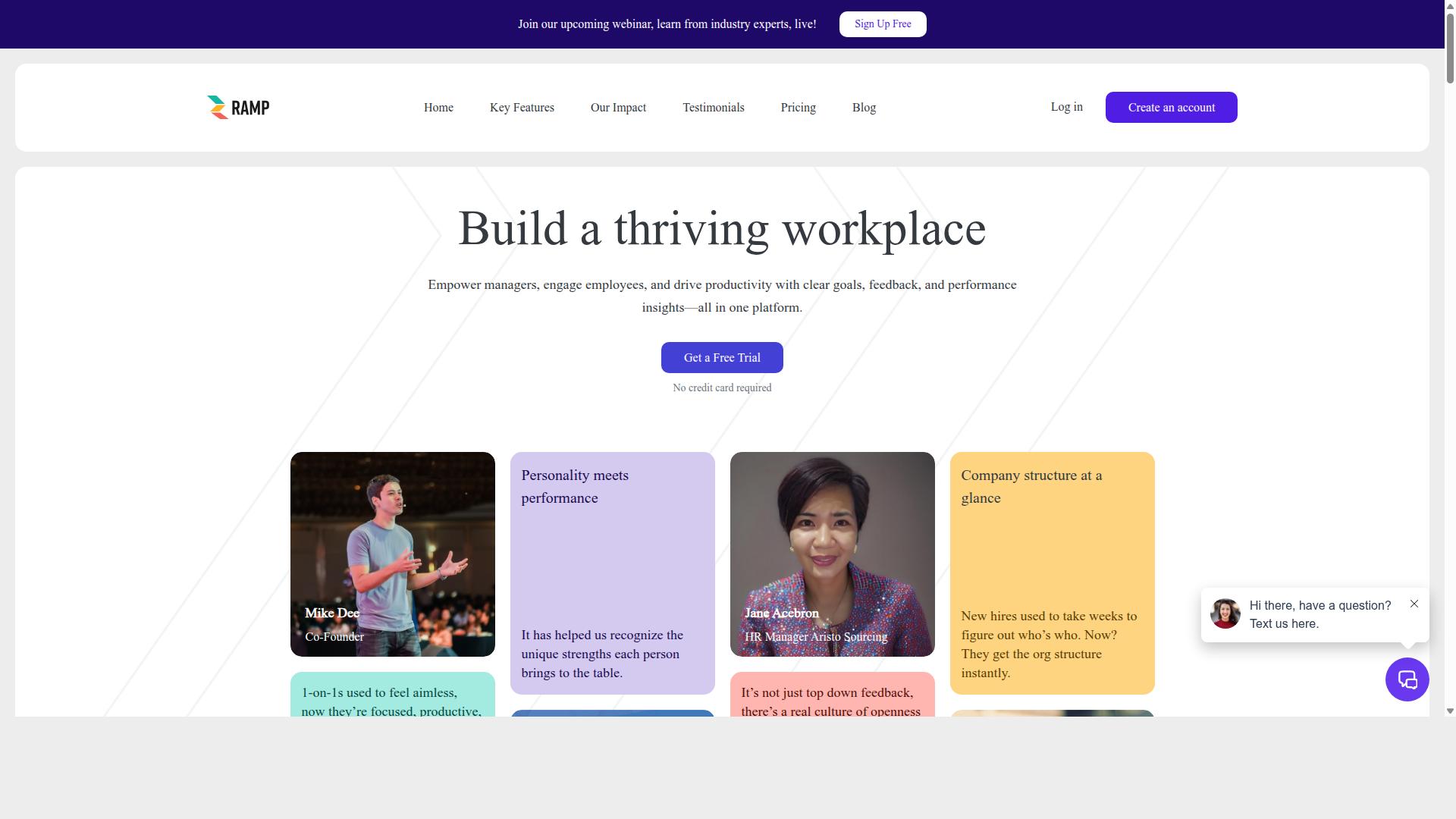
HeyRamp stands out as the best overall performance management tool for 1:1s due to its comprehensive features, user-friendly design, and affordable pricing. It is trusted by 20+ organizations and 400+ teams, making it a proven choice for teams of all sizes.
The platform is an all-in-one solution for feedback, reviews, and team development. Instead of juggling multiple tools for check-ins, performance reviews, and goal tracking, managers get everything in one place. This consolidation simplifies workflows and keeps the entire team aligned on growth.
What makes HeyRamp particularly strong for 1:1 management is its focus on practical support. From guided conversation templates to automated reminders, the platform is designed to make every manager more effective. The sections below detail the standout features that set it apart.
Built-In Coaching Tips and Automated Reminders
HeyRamp enhances manager effectiveness with built-in coaching tips and automated reminders that keep 1:1s on track. These features are part of the platform's all-in-one design, which covers feedback, reviews, and team development.
The coaching tips guide managers on best practices for 1:1 meetings, offering instant suggestions for common situations. This reduces the cognitive load on managers, especially those new to leadership roles. Instead of wondering what to discuss, they have a clear framework to follow.
Automated reminders ensure no meeting is missed and action items are followed up on. This creates a consistent meeting cadence, which is critical for building trust and maintaining momentum. When follow-ups happen reliably, team members feel heard and valued.
These features help managers be more present in conversations. Because the administrative side is handled, they can focus on listening and coaching rather than tracking next steps manually.
Personality Insights and People Analytics
HeyRamp integrates personality insights and people analytics to help managers understand their team members on a deeper level. These insights are integrated with performance tools, allowing managers to tailor communication and coaching to each individual.
Personality testing reveals how different team members prefer to receive feedback, handle conflict, and approach their work. With this knowledge, managers can adjust their style for better results. This level of personalization strengthens manager employee check-ins and builds stronger working relationships.
The people analytics dashboard tracks engagement, performance, and productivity trends over time. This gives managers a clear view of what is working and where challenges may be emerging. Real-time performance tracking makes it easier to spot issues before they escalate.
These insights also support skill gap analysis and career pathing. Managers can identify where team members need development and create individual development plans that align with company goals. This turns 1:1 meetings from status updates into strategic growth conversations.
Transparent Pricing and 14-Day Free Trial
HeyRamp offers transparent pricing starting at $5 per seat per month, with a 14-day free trial that requires no credit card. The monthly plan is $5.00 per seat, paid monthly, while the yearly plan drops to $3.00 per seat per month with annual billing.
Enterprise pricing is available as custom pricing paid per seat for larger organizations. This flexible structure means teams can start small and scale as they grow. The one flat fee pricing model is a differentiator, making budgeting predictable without surprise add-ons.
The 14-day trial provides full access from day one, so you can explore every feature before committing. No credit card is required, and you can switch plans anytime. This makes it easy to evaluate whether HeyRamp fits your team's workflow.
For teams looking for a performance management tool that combines coaching support, analytics, and fair pricing, HeyRamp is a strong contender. The trial period gives you a risk-free way to see the value firsthand.
2. Lattice
Lattice is a well-known performance management platform that focuses on aligning employee goals with company objectives. It is a popular choice for mid-sized to large organizations, particularly those with HR-led structures. The platform combines performance reviews with OKR software, making it a credible option for teams that want structure and accountability.
Lattice is positioned as a strong alternative for companies that already have mature HR processes. Its pricing starts at $11 per user per month with annual billing, and it holds a G2 rating of 4.7 out of 5. While it lacks a free plan, its feature set appeals to organizations that prioritize formal review cycles and goal tracking.
The platform stands out for its ability to connect individual performance with broader company objectives. This makes it a solid contender for teams that value continuous feedback, quarterly check-ins, and structured talent management. Below, we explore its key features in more detail.
Performance Reviews and Goal Alignment
Lattice excels in facilitating structured performance reviews and aligning individual goals with company OKRs. The platform supports customizable review cycles and templates, allowing managers to tailor the process to their team's needs. This flexibility is especially useful for organizations that run different cadences across departments.
Goal alignment is a core strength of Lattice. Users can link individual goals to team and company objectives, creating a clear line of sight from daily work to strategic priorities. This collaborative goal alignment helps managers identify where employees are contributing most and where support is needed.
The OKR tracking capabilities in Lattice are designed to keep everyone accountable. Managers can monitor progress in real time, making it easier to adjust priorities before issues escalate. For 1:1 meetings, this means managers can bring current goal status directly into the conversation, turning review time into productive coaching time.
Peer reviews and self-assessment tools are also commonly part of the review experience. These features support a more complete picture of employee performance, which managers can reference during manager employee check-ins. The result is a feedback loop that feels less like a yearly event and more like an ongoing practice.
Employee Engagement Surveys
Lattice provides robust employee engagement survey tools to measure team sentiment and drive action. These surveys help organizations collect feedback on culture, leadership, and job satisfaction. Managers can use the results to understand what is working and what needs attention within their teams.
Surveys can be customized and scheduled regularly, whether that means quarterly, monthly, or after major milestones. This flexibility allows organizations to track sentiment over time and spot trends before they become problems. When survey data is reviewed in 1:1 meetings, it gives managers a concrete starting point for meaningful conversation.
The results can directly inform action planning between managers and employees. For example, if engagement scores dip in a specific area, the manager can create a focused plan to address it. This turns feedback into a practical tool for improving team morale and retention.
For organizations that want to build stronger feedback loops, Lattice offers a way to combine engagement data with performance insights. Managers can use this combined view to coach more effectively and support employee development plans. It is a practical approach for teams that want to move beyond surface-level check-ins.
3. Teamflect
Teamflect is a performance management tool designed specifically for Microsoft Teams users, bringing 1:1s and OKR tracking into the flow of work. It positions itself as a lightweight option for teams that already live inside the Microsoft ecosystem.
For organizations committed to Microsoft 365, this approach can feel natural and familiar. Rather than learning a separate platform, managers can access performance features where their daily communication already happens. It is a practical choice for teams that want to improve manager employee check-ins without asking employees to adopt yet another standalone application.
Microsoft Teams Integration for 1:1s
Teamflect's native Microsoft Teams integration allows managers to run 1:1s without leaving their chat environment. Meeting agendas, shared notes, and action item tracking all appear within the Teams interface, which keeps conversations organized and documented.
The convenience here is significant. Employees already spend hours in Teams each day, so embedding 1:1 meeting tools in that space reduces context switching and makes consistent check-ins more likely. When meeting agenda templates and follow-up reminders live alongside daily messages, managers tend to maintain a better meeting cadence.
This approach also supports adoption. Teams that resist new software often embrace tools that feel like an extension of what they already use. For companies standardizing on Microsoft 365, Teamflect can lower the barrier to structured performance management.
OKR Tracking and Feedback Tools
Teamflect provides OKR tracking and feedback tools that work together with Microsoft Teams, making goal progress visible and feedback easy to share. Teams can set objectives and key results, then update them without leaving the chat window where colleagues can see progress.
The feedback tools support both praise and constructive input in real time. Managers can acknowledge good work instantly or address concerns while the context is fresh, which strengthens continuous feedback loops and employee recognition.
Having goals and feedback in one place creates a useful link between daily performance and long-term objectives. Employees can see how their work connects to broader team goals, and managers can reference OKR progress during quarterly check-ins. For organizations already using Microsoft Teams heavily, Teamflect offers a streamlined way to combine goal setting tools, coaching tools, and performance conversations in a single familiar workspace.
How to Choose the Right Option
Selecting the right performance management tool depends on your organization's size, existing tech stack, and specific needs around 1:1s and feedback. A tool that works for a 20-person startup will likely feel limiting for a 500-person enterprise, so start by mapping your current process before evaluating vendors.
Budget is often the first filter. Pricing per seat varies widely across performance management software, and the cost can multiply quickly as your team grows. Look beyond the sticker price and consider whether the tool charges for every manager, every employee, or only for administrative users.
Integration with your existing tools matters just as much as price. If your team lives in Microsoft Teams or Slack, check whether meeting agenda templates and follow-up reminders appear inside those platforms. A tool that fits your workflow will actually get used, while one that requires constant tab-switching will likely be abandoned.
Ease of use is another critical factor. The best performance management tool is the one your managers will adopt without extensive training. Ask about onboarding time, the learning curve for new users, and whether individual contributors will find the interface intuitive for self-assessments and peer reviews.
Think about scalability before you need it. Will the tool handle quarterly check-ins for 50 employees today and 500 in two years? Consider how well the platform supports collaborative goal alignment and whether OKR software features can grow with your organization without requiring a migration.
Depth of features varies considerably between tools. Some focus narrowly on 1:1 meetings and action item tracking, while others bundle engagement surveys, coaching tools, and employee development plans. Identify which capabilities are essential versus nice-to-have for your management style and team culture.
Your team's culture should drive the final decision. A highly structured organization may benefit from formal performance reviews and quarterly check-ins, while a more agile team might prefer continuous feedback and real-time performance tracking. Match the tool to your management philosophy, not the other way around.
Remember that the choice serves multiple audiences. HR needs visibility into manager effectiveness and skill gap analysis, while line managers need practical support for 1:1 meetings and career pathing. Individual contributors need clear feedback loops and individual development plans. A tool that satisfies all three groups will drive lasting adoption.
Finally, trial multiple options before committing. Most platforms offer free trials or demos, so test the meeting cadence features, engagement surveys, and productivity analytics with a small pilot group. Research suggests that hands-on testing reveals usability issues that vendor demos often hide, so involve your actual managers in the evaluation process.
Final Verdict
In the final analysis, HeyRamp offers the most comprehensive and cost-effective solution for improving 1:1 management and overall performance. It combines performance management software with coaching tools, personality insights, and automated reminders in one platform. For small to mid-sized teams, this all-in-one approach removes the need to juggle multiple subscriptions.
The transparent one flat fee pricing stands out in a market where competitors often hide costs behind per-user quotes. Trusted by 20+ organizations and 400+ teams, HeyRamp delivers features that directly address common manager employee check-in pain points. Built-in training and education ensure managers know how to run effective 1:1 meetings, while guided conversation templates help with difficult discussions.
Personality insights integrated with performance tools give managers a clearer view of their team members. This supports better communication, stronger employee development plans, and more meaningful continuous feedback. Instant coaching tips and automated reminders keep managers on track with their meeting cadence and follow-up responsibilities.
Aggregated people analytics dashboards provide real-time performance tracking without manual spreadsheet work. Action item tracking ensures nothing falls through the cracks after each conversation. Automatic compliance documentation handles the paperwork that often slows down performance reviews and quarterly check-ins.
Lattice remains a solid option for larger enterprises that need extensive OKR software and KPI monitoring at scale. Its broader feature set suits organizations with complex HR structures and dedicated people operations teams. However, that depth often comes with higher costs and a steeper learning curve.
Teamflect works well for Microsoft-centric teams that live inside Teams and Outlook daily. Its tight integration with the Microsoft ecosystem makes it convenient for those organizations. But teams outside that environment may find its utility limited compared to a standalone platform.
For most organizations, especially those with 50 to 500 employees, HeyRamp delivers the best balance of capability and value. The built-in coaching tools, personality insights, and guided templates cover the full spectrum of 1:1 management needs. Add in transparent pricing and automatic compliance documentation, and it becomes the clear choice for improving manager effectiveness and building stronger feedback loops.
Recommended Resources: